The Myth That Every Outfit Needs a Focal Point
An outfit focal point need not be a standout item. Use these practical checks to make quiet details feel connected, intentional, and right for the occasion.
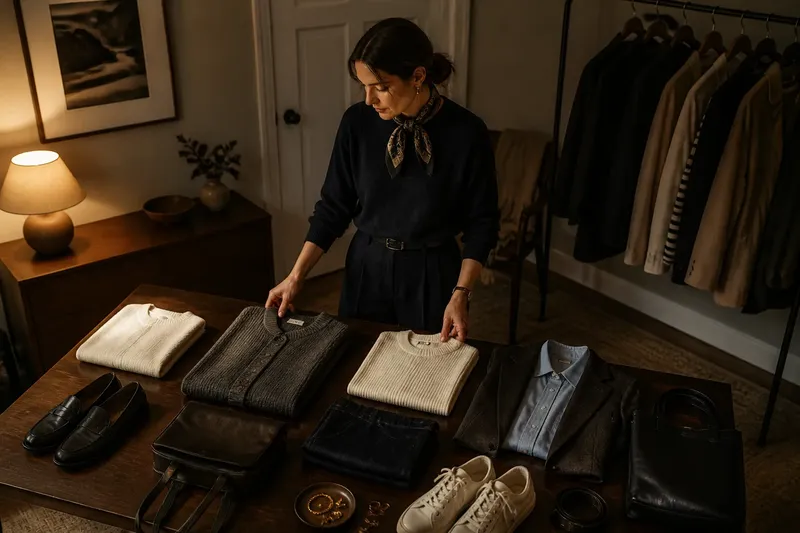
You pull on a navy sweater, straight-leg trousers, and loafers, then add a bright scarf because the outfit seems to be missing something. But an outfit focal point does not have to be a single loud item. A clear point of view can come from how the pieces work together: a steady level of polish, a repeated detail, or a deliberate contrast.
Instead of asking what to add, ask what you want the outfit to communicate. Calm, tailored, relaxed, or tactile are all useful directions. Once you name one, it is easier to see whether an item supports that impression or distracts from it.
What can give an outfit a point of view?
A point of view is the impression created by the whole combination, not necessarily a statement piece. A neat collar, restrained colors, and polished leather might read as composed; soft fabrics and relaxed shapes might feel easygoing. Neither needs a single item to take over.
Choose one quality to carry through the outfit. That could be texture, a consistent degree of formality, or a detail repeated in more than one place. Treat these as ways to organize what you already own, not rules that every outfit must follow.
- If the clothes share a relaxed mood, keep the shoes and bag similarly casual; if one looks notably formal, switch it or make that contrast intentional with another polished detail.
- If a color appears only once and feels isolated, repeat a related tone in a small accessory; if the color still feels too conspicuous, replace it with a shade already present.
- If smooth fabrics make the combination feel plain, add one tactile surface such as ribbed knit; if the texture makes the outfit feel busy, return to a smoother piece.
- If two accessories both draw attention near the face, remove or simplify one; if each has a distinct role and the rest of the outfit is quiet, keep both.
- If the outfit looks like separate pieces rather than a combination, identify a shared finish such as matte fabric or similar leather; if no useful link appears, change the item that feels least at home.
- If a strong contrast feels deliberate and suits the occasion, keep it; if it reads as an accidental mismatch, bring one item closer in formality, color, or texture.
How can you add interest without a statement piece?
Use contrast in a controlled way. A crisp cotton shirt under a relaxed cardigan, a smooth belt against textured trousers, or a matte bag beside a subtle metallic detail gives the eye something to notice without turning the outfit into a contest.
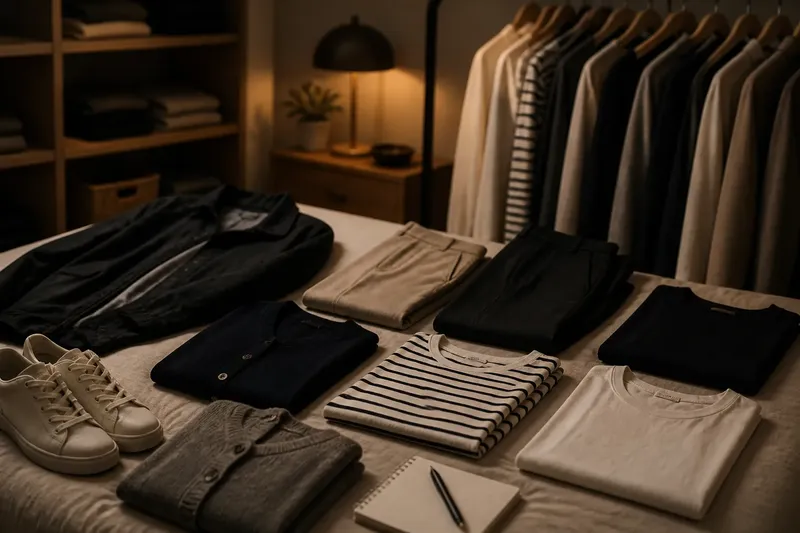
Say you have a charcoal cardigan, dark jeans, black flats, and a smooth black top, and the outfit feels like one unbroken dark block. You swap the top for a cream ribbed shirt while keeping the other pieces. The likely visible result is clearer separation and a little surface interest; the tradeoff is that the light shirt becomes the most noticeable element, so you might choose a softer gray if you want less contrast.
It is not worth hunting for a special accessory just to make an outfit look styled. First see whether a cuff, collar, fabric texture, or shoe finish already gives the combination enough character.
What should you check when pieces feel disconnected?
Look at the outfit as a set of choices, not as a row of individual favorites. Ask what each piece contributes to the impression you want: shape, texture, color, comfort, or polish. If an item has no useful role and does not create a contrast you enjoy, try another option.
Imagine you are dressing for a casual dinner and have a soft, unstructured jacket, a graphic T-shirt, slim dark trousers, and glossy dress shoes. You want a relaxed but tidy look. First, you decide the glossy shoes feel too formal beside the shirt, so you replace them with clean leather sneakers; the outfit now reads more casual. Next, you notice the graphic still pulls attention from the jacket, so you swap it for a plain fine-gauge knit. The resulting combination has a quieter center and a more consistent mood, though it loses the graphic’s personal edge. If that edge matters more, keep the T-shirt and use the dress shoes only if the occasion supports the contrast.
That example shows why the best edit depends on the impression you want, not on a universal rule about matching. A contrast can be the point; it just helps to make the choice consciously.
How do you know whether the outfit feels balanced?
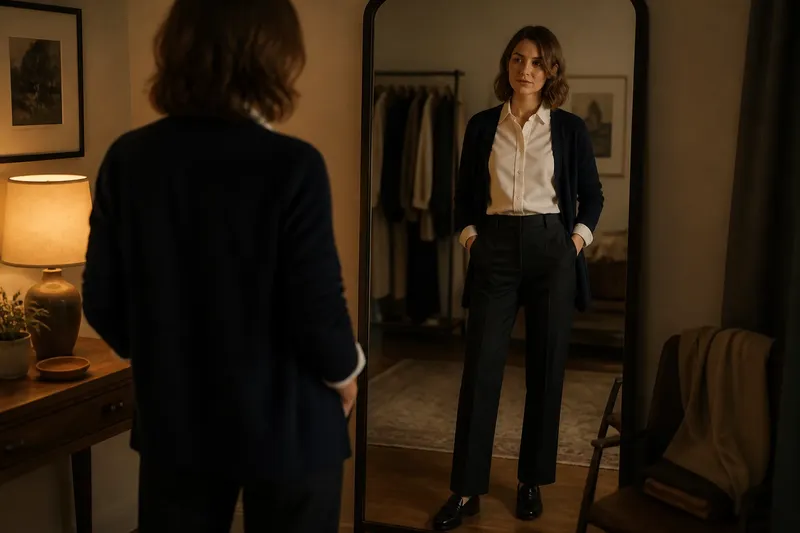
Step back from the mirror and notice what you register first, then what you notice next. If your attention can move across the clothes and you can name the quality tying them together, the combination may be working. If your eye keeps catching on one unrelated detail, decide whether you want that detail to lead or would rather soften it.
Make one change at a time so the effect stays clear. If the outfit feels crowded, remove an accessory; if it feels flat, try a change in texture; if it feels disconnected, look for a shared finish or mood. Then check the result in the mirror and consider the occasion before making another edit.
What questions help you choose a focal point?
Can an outfit have two noticeable details?
Yes, if they do not compete for the same attention. A textured sweater and a distinctive bag can work together when the rest of the outfit gives them room and their scale feels compatible.
Can neutral clothes still feel intentional?
Yes. Fabric, silhouette, and finish can supply interest without a bright accent. Check that the pieces share a mood or have a contrast you chose on purpose.
Should you remove something if nothing stands out?
Not automatically. If the outfit feels coherent, suits the occasion, and feels like you, it may not need a standout item. Remove a piece only if it interrupts the look you want or adds clutter.
What is not worth the effort?
There is little value in adding a statement accessory just to satisfy a styling rule. If the clothes already feel connected and appropriate, a louder detail may create a problem rather than solve one.
What is a useful last check before you leave?
Name the impression you want, then point to the detail that supports it. It might be the relaxed shape of the jacket, the tactile knit, or the repeated dark tones. If you can explain that choice in plain terms, your outfit focal point can be a relationship between pieces rather than a single showpiece.
For a quick final decision, check the setting as well as the mirror: a quiet combination that feels right for a coffee run may need a sharper finish for a formal dinner. Adjust only what the occasion asks for, and let the rest of the outfit keep its own character.